Essay · · 5 min read
What I've become good at.
The moment I stop articulating, I disappear. And I'm not sure which is worse: being known for a version of myself I've carefully constructed, or being unknown because I stopped bothering to construct.
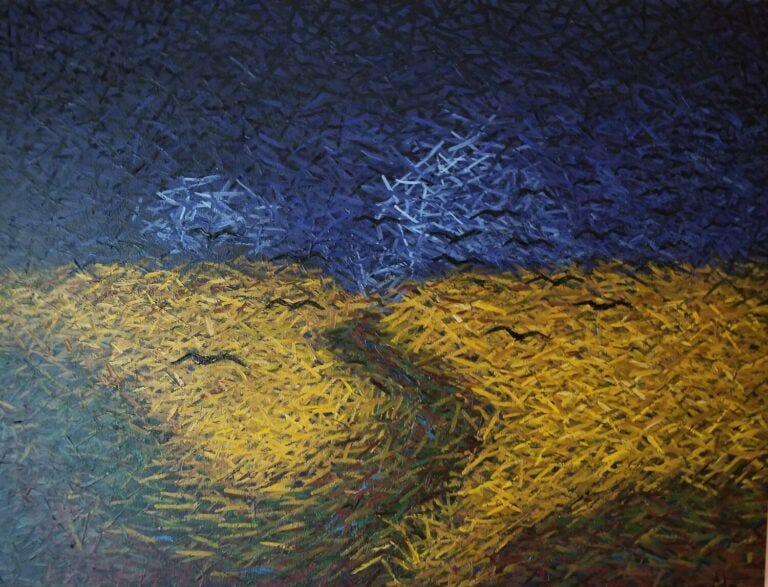
I’ve spent years becoming very good at something that doesn’t actually help: explaining myself. I can articulate my failures so precisely that people think I’ve moved past them. I can turn pain into prose and make it sound like wisdom. But articulation isn’t healing. Clarity isn’t resolution. And I’m still as broken as I was before I learned how to make it sound beautiful.
I wanted to be extraordinary. Not famous. Just more than I am. And I’m not. So now I’m very good at explaining why I’m not. Which is, I suppose, a kind of accomplishment. But it’s not the kind I wanted.
For years, people have told me to find myself. As though somewhere inside there’s a hidden answer waiting. But what if I’m afraid of what I’ll find? What if the person underneath everything is just... ordinary?
The dangerous thing about being articulate is that people confuse clarity with resolution.
I can tell you exactly what’s wrong withh me. I can name the fear, trace its origins, describe the shape it takes in my chest. I can make my sadness sound like philosophy. I can turn my broken things into beautiful sentences.
And everyone thinks I’ve healed.
They think that because I can articulate the wound, I must have already stopped bleeding.
I’ve noticed something, the more precisely I describe my pain, the less real it becomes to other people.
It transforms into content. Into something they can admire from a distance. Something they can feel moved by, then close the tab on.
They don’t realize that naming something doesn’t fix it. That understanding yourself doesn’t mean you’ve changed. That being able to write about your loneliness doesn’t make you any less lonely.
The worst part is that I’ve started using my own articulation against myself.
If I can write about ambition with enough intelligence, I must have already moved past the disappointment of it.
If I can describe my smallness eloquently enough, I must have already accepted it.
If I can turn my failures into metaphors, they must not actually be failures anymore.
But that’s not how it works.
I wanted to be extraordinary.
Not famous. Not impressive to strangers.
Just... more than I am.
I thought by the time I was this age, I would have become someone I recognized. Someone I could respect. Someone whose potential had actually meant something.
Instead, I’m just a person who’s very good at explaining why I’m not that person.
There’s a particular cruelty in being intelligent enough to understand your own ordinariness.
But if you’re smart enough to see it coming, if you can articulate the exact moment you realized you weren’t going to be exceptional, then you have to live with that knowledge. You have to carry the gap between who you thought you’d be and who you actually are.
And you have to do it while being aware of the gap. Which somehow makes it worse.
And there it is.
The ugly thing.
The jealousy.
There's a kind of jealousy we pretend doesn't exist. The kind that has nothing to do with beauty or success
The jealousy of realizing that the people who matter most to you have entire worlds that exist without you.
Sometimes I watch my closest friends laugh with someone else and feel something tighten. Not because I want them all to myself. But because some frightened part of me starts asking questions.
Are they closer to them than to me?
Would they miss me as much as I would miss them?
Am I replaceable?
People ask me how I write these things.
How I can be so sad, so honest...
And I never know how to tell them the truth: that this articulation is a kind of armor.That being able to name my failures before anyone else can means they can’t hurt me as much.
That if I get there first, if I say it before they think it, then at least I have some control over the narrative.
But there’s a cost to that.
The cost is that I’ve become so good at explaining myself that I’ve stopped actually knowing myself.
I know what I’m supposed to say about my ambitions. I know the right words for my disappointment. I know how to frame my ordinariness in a way that makes it sound like wisdom.
But underneath all that language, I’m not sure who I actually am anymore.
I know how ridiculous the jealousy sounds.
Human beings aren’t positions. Friendship isn’t a competition. People can care about more than one person.
I know all of this.
And yet feelings have never cared much for logic.
So I’m caught between two truths.
The first is that I genuinely want the people I love to have rich, beautiful lives with people who care about them.
The second is that sometimes I wish I was more important in those lives than I probably am.
Sometimes I want to be chosen. Sometimes I want to be the person they think of first. Sometimes I want proof that my place in their life is as secure as theirs is in mine.
And every time I admit that, I feel ashamed.
There’s something humiliating about wanting.
The shame of being caught needing something. The moment someone realizes you care more than you intended. The moment your loneliness becomes visible.
Maybe that’s why so many of us pretend. We pretend not to care. Pretend not to need. Pretend not to hope.
Not because we’re strong.
Because wanting is terrifying.
Sometimes I think the most honest thing I could do is stop writing.
Stop turning my life into sentences. Stop making sense of things that don’t make sense. Stop using intelligence as a shield.
Just sit with the mess without explaining it.
But I can’t do that either.
Because the moment I stop articulating, I disappear.
And I’m not sure which is worse: being known for a version of myself I’ve carefully constructed, or being unknown because I stopped bothering to construct anything at all.
Lately, I’m trying to tell myself something simple:
I’m not broken. I’m not failing.
I’m just human.
Human enough to be lonely in a crowded room. Human enough to fear what I might find in myself. Human enough to want things I can’t have. Human enough to still be sad while talking about happiness.
Maybe loneliness isn’t about being alone at all.
Maybe it’s standing in a room full of people you love and wondering if your absence would leave the same shape in their lives that theirs leaves in yours.
The ambition was supposed to mean something.
I was supposed to become something.
And instead, I just became very good at describing what it feels like to not become anything.
Which is its own kind of accomplishment, I guess…